
Defying materiality
(restaurant zone)
The following works explore the intersection of art, technology, and science, focusing on bioelectronic art, environmental sustainability, climate solutions, mental well-being through design, and the ethical implications of emerging biotechnologies.
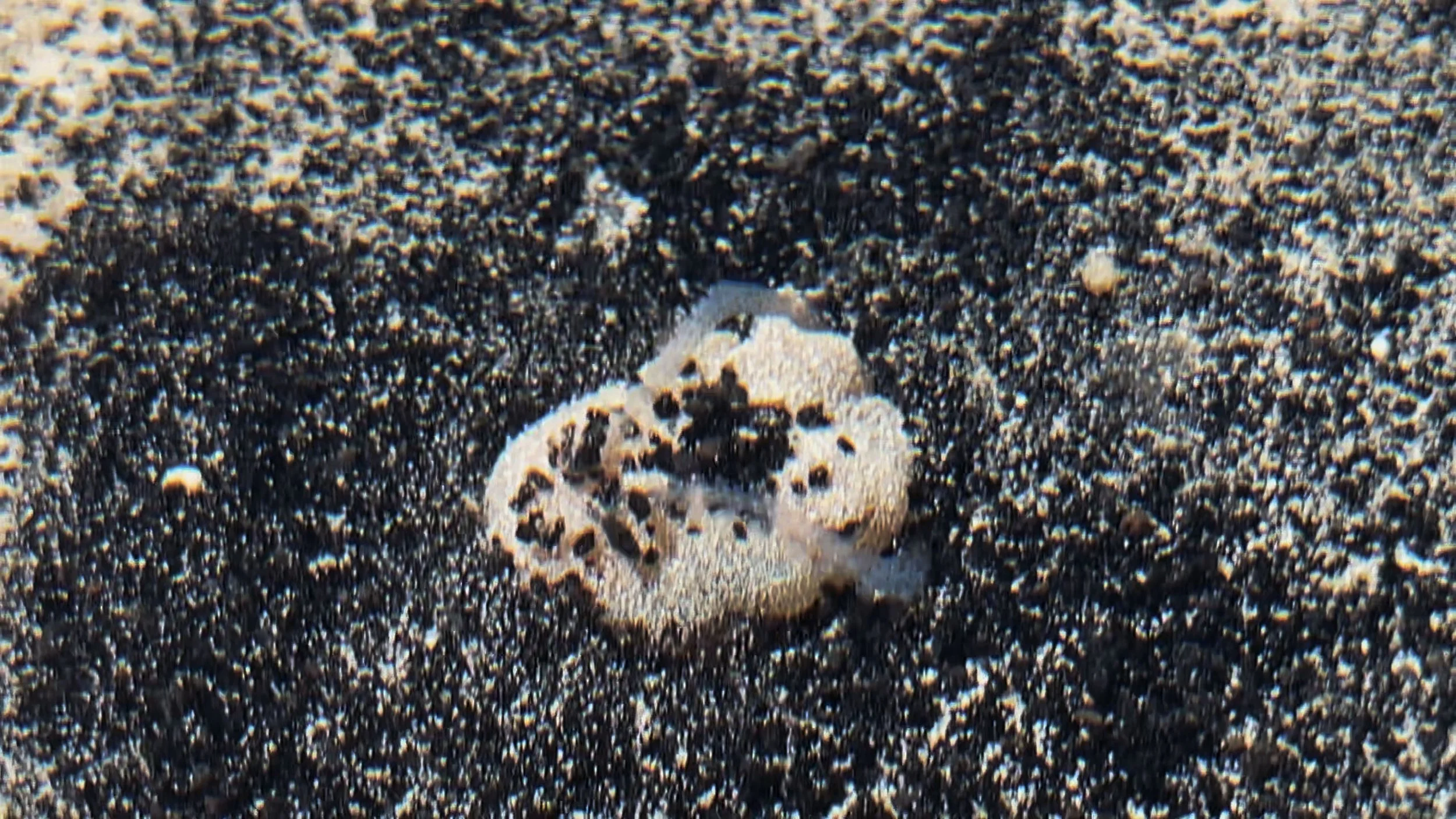
‘Squid Map’
by Artist, Designer, and Technologist Jiabao Li
Squid Map offers a unique perspective on borders and migration, inspired by a fascinating observation at the Kewalo Marine Biology Lab in Hawaii. While studying squid, Li noticed their monotonous environment and embarked on a mission to create a captivating playground for them. The squid interacted unexpectedly by crafting sand into shapes resembling countries, traversing boundaries without constraint. Through this piece, she underscores how our human-made borders can disrupt natural rhythms, prompting reflection on our significance to territorial lines.
Jiabao Li is an Artist, Assistant Professor at The University of Texas at Austin, Co-founder and Chief Product Officer of Endless Health, Founding Director of Ecocentric Future Lab, and a Harvard graduate. She creates works addressing climate change, interspecies co-creation, humane technology, and perceptions. In Jiabao’s TED Talk, she uncovered how technology mediates the way we perceive reality. Jiabao is the recipient of numerous awards, including Forbes China 30 Under 30 and the Outstanding Professor Award at MoMA. Her work has been exhibited internationally at MoMA, Venice Architecture Biennale, Ars Electronica, Today Art Museum Biennial, SIGGRAPH, Milan and Dubai Design Week, ISEA, Anchorage Museum, and Museum of Design.
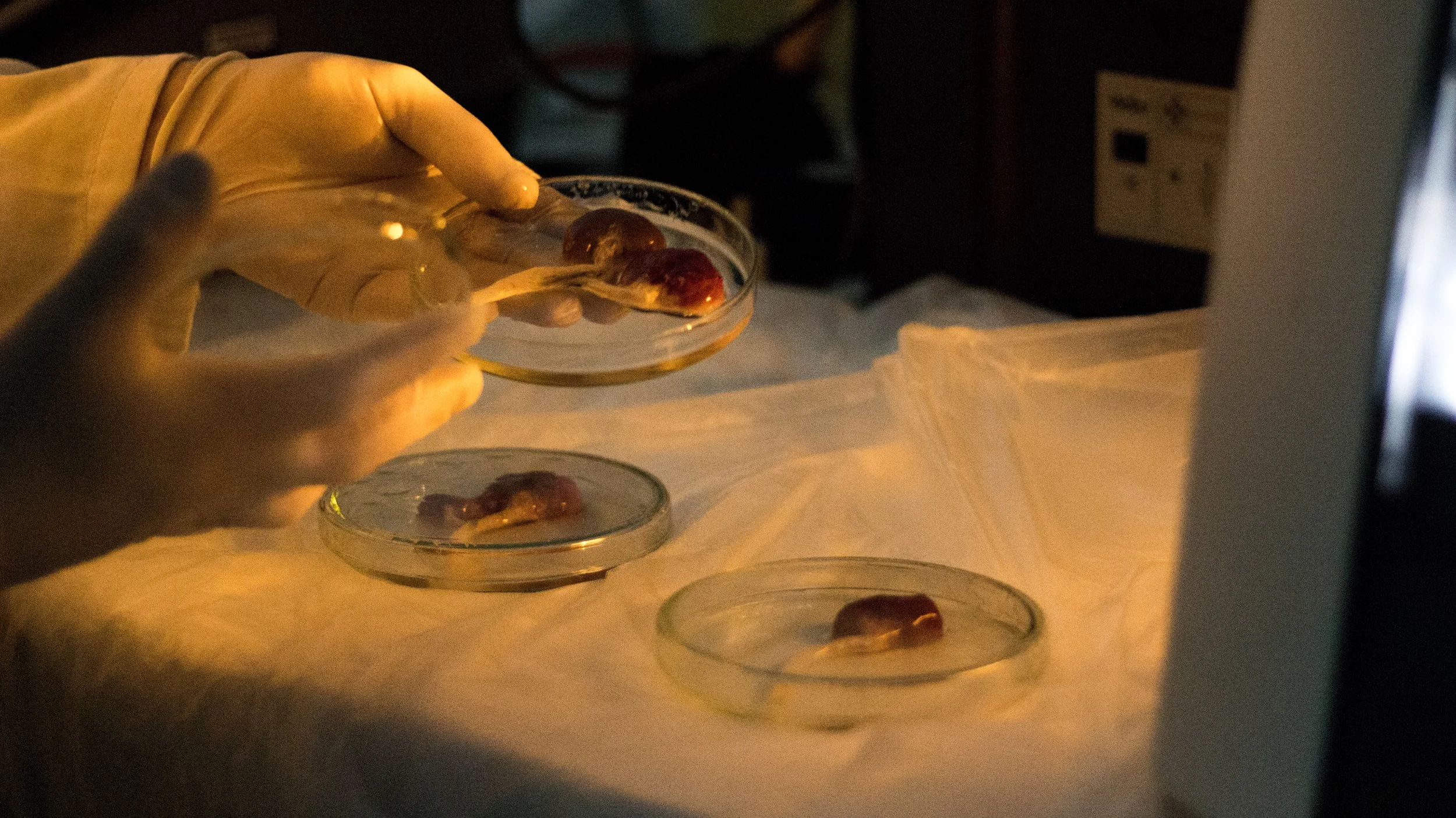
‘Three Stage Kidney’
by Designer, Researcher and Bio Artist Noémie Soula
Scientists can print DNA sequences, enabling body modification to improve health conditions. A design research team is now concentrating on developing an innovative and unique range of kidney organs capable of mutation when failure or malfunction happens.
Noémie Soula is an artist and researcher using storytelling as a creative tool to explore biotechnologies, genetics, and the relationship between human and non-human. Playing with the visceral and the liminality between reality and fiction, the created artworks, physical or digital, act as an uncanny event stimulating the audience’s imagination.
She was the selected artist to receive the Da Vinci Labs’ LEONARDO REBOOTED grant in the Synthetic Biology category in 2022 for the project Mythical Living Data, later exhibited in the Moore St. Electrical Substation, No Bounds Festival, Sheffield. Recent exhibitions include Epidermotopia (Paris), NEW NOW Festival (Essen), and Giudecca Art District (Venice).
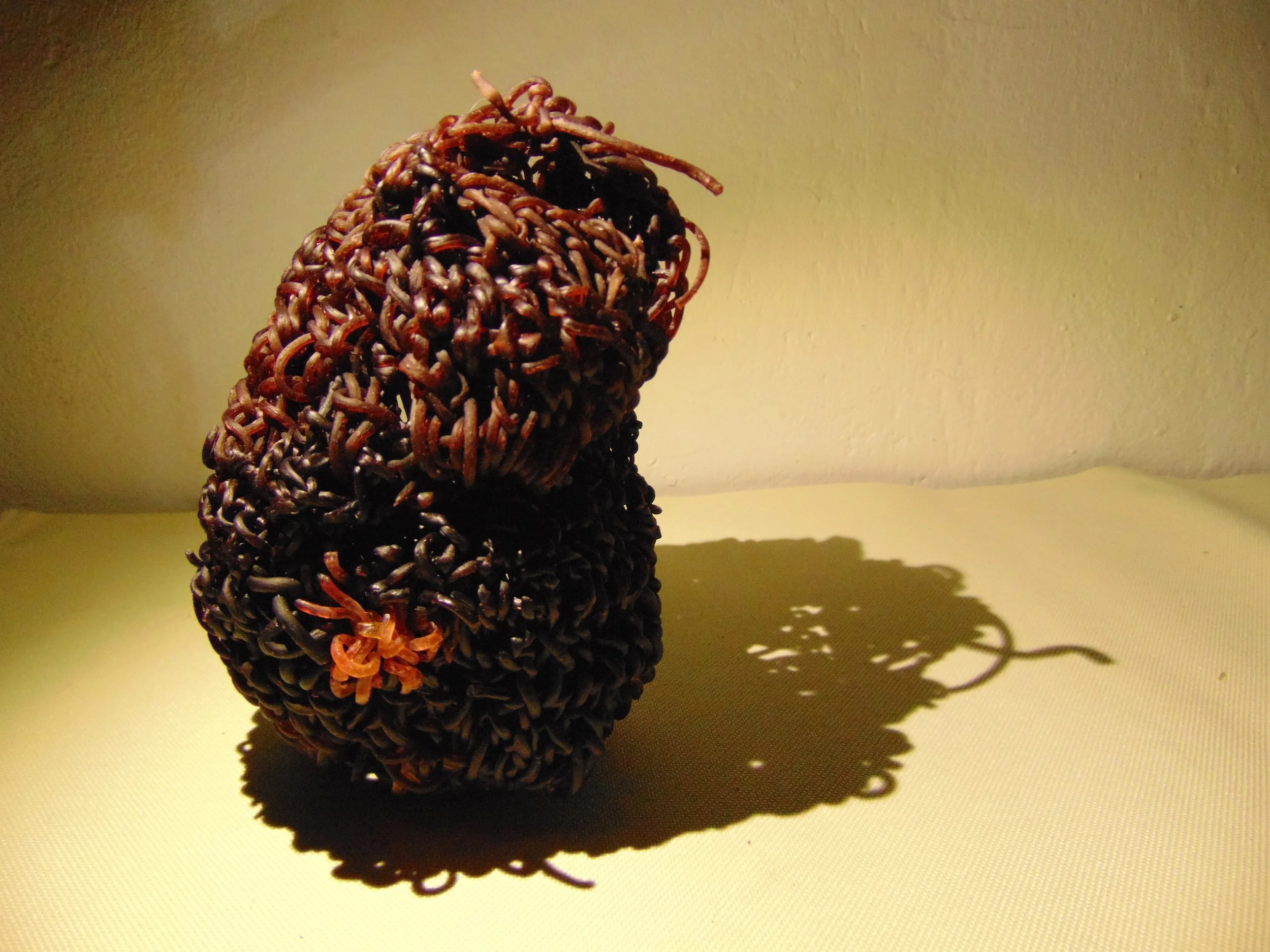
‘Tissues from the Uterus’
by Bioelectronic Artist, Researcher, and Professor Ana Laura Cantera
Tissues from the Uterus is made from menstrual blood and algae weaving.
"Weaving is my memory. It is to weave my body, as well as recreating it. The act of weaving unifies to my ancestors, my female precedents who have practised this activity as an act of resistance and subsistence. To weave carries me on to distant times when grandma and mum entangled their times in yarns, made emotional skeins, and unravelled anxieties. Tangling wool, intertwining, and being together in our pasts and contemporaneity."
Ana Laura Cantera is an Argentinian bioelectronic artist, researcher, and professor pursuing her PhD in Arts and Technoesthetics at Universidad Nacional de Tres de Febrero (UNTREF). She teaches in various programs at UNTREF and Buenos Aires University, focusing on the intersection of art, technology, and environmental humanities. Her expertise lies in creating biomaterials, with a specialisation in designs grown from mushroom mycelium.
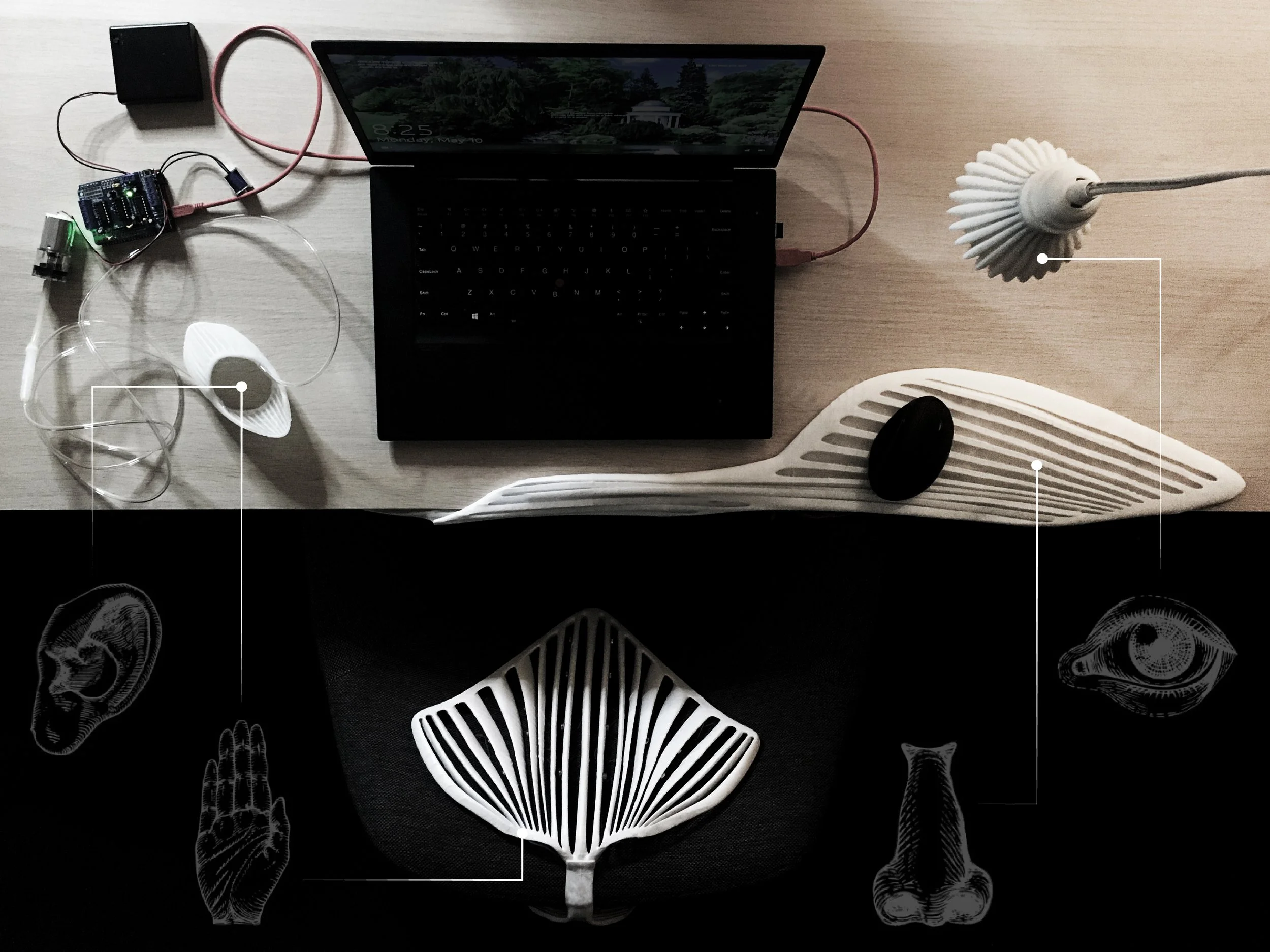
‘Incognito’
by Architectural Designer and Researcher Katarina Richter-Lunn
Incognito explores the potential of using covert physiological signals collected by devices like phones, watches, and jewellery to create sensory experiences that enhance awareness of one's cognitive state and promote positive emotions. These signals, which include data on movement, heart rate, and more, can indicate stress and anxiety levels.
Katarina Richter-Lunn is an architectural designer and researcher pursuing her Doctorate of design at the Harvard Graduate School of Design. Her primary research lies at the intersection of design, psychology, and neuroscience to address mental well-being through the built environment. Katarina seeks to envision how architecture, design, and our latest technological tools can embody spatial forms of therapy to provide more empathetic, seamless, and accessible design solutions for emotional disorders.
As part of this work, she explores perception through the lens of material development, computational design, affective computing, and robotics. Katarina holds a master's in design technology from the GSD and a bachelor of architecture from California Polytechnic San Luis Obispo. She has worked at leading firms, including Snøhetta, Arup, IwamottoScott, and most recently Gehry Partners, where she served as a project designer for three years.